


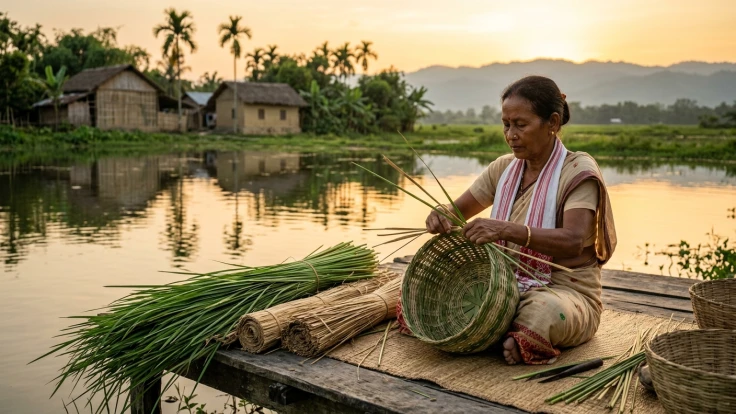
Among the hidden treasures of Assam lies an extraordinary craft born from nature itself: the Kauna Grass Basket.
Woven by skilled artisans using techniques passed down through generations, these baskets are more than storage solutions. They represent sustainability, cultural heritage, and the resilience of rural communities.
Every Kauna basket begins its journey in the wetlands of Assam and finds its place in homes across India and increasingly around the world.
What is Kauna Grass?
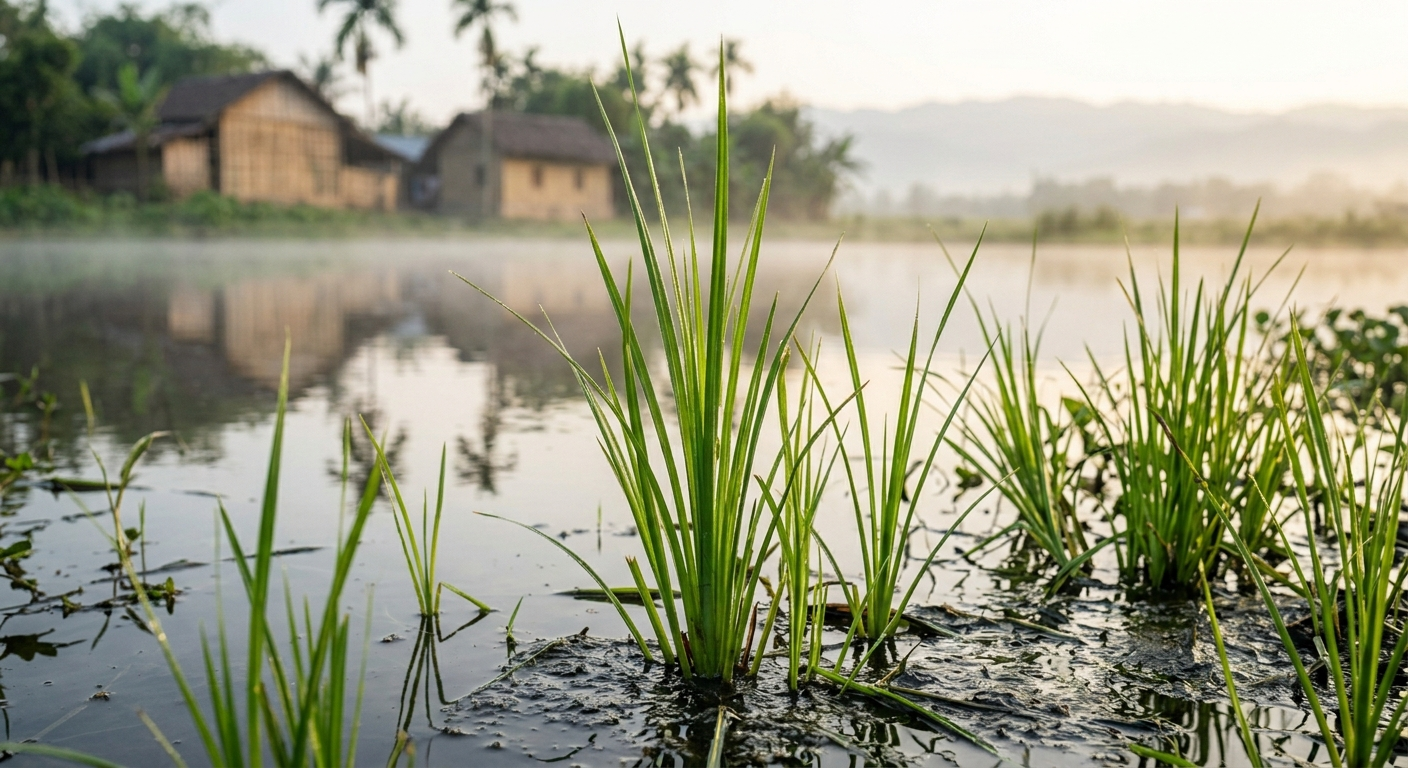
Kauna is a naturally growing aquatic reed found in the marshlands and waterlogged areas of Assam.
Known scientifically as a type of water reed, Kauna thrives in shallow wetlands where the soil remains moist throughout much of the year.
For generations, local communities have harvested this versatile plant and transformed it into beautiful handcrafted products such as:
Storage baskets
Laundry baskets
Decorative trays
Planters
Furniture
Handbags
Home décor items
Unlike synthetic materials, Kauna is entirely natural, biodegradable, and renewable.
Its soft texture, lightweight nature, and natural golden finish make it ideal for both functional and decorative products.
The Heartland of Kauna Craft in Assam

The craft is primarily associated with several districts of Assam, particularly:
Known for skilled artisan communities engaged in traditional weaving.
Emerging center for Kauna-based handicraft production.
Several communities create innovative Kauna products for modern markets.
Many artisan families rely on Kauna weaving as a supplementary source of income, helping sustain rural livelihoods while preserving traditional skills.
Harvesting Kauna: A Seasonal Ritual
The journey of a basket begins long before weaving.
During the harvesting season, artisans carefully cut mature Kauna reeds from wetland areas.
The process involves:
Only mature reeds are selected to ensure strength and durability.
The reeds are washed to remove mud and impurities.
The harvested grass is sun-dried for several days.
Exposure to sunlight gradually transforms the green reeds into a beautiful golden-beige color.
The dried reeds are sorted based on thickness and quality.
This entirely natural process requires patience and deep knowledge of the material.
The Art of Weaving: Where Tradition Meets Skill
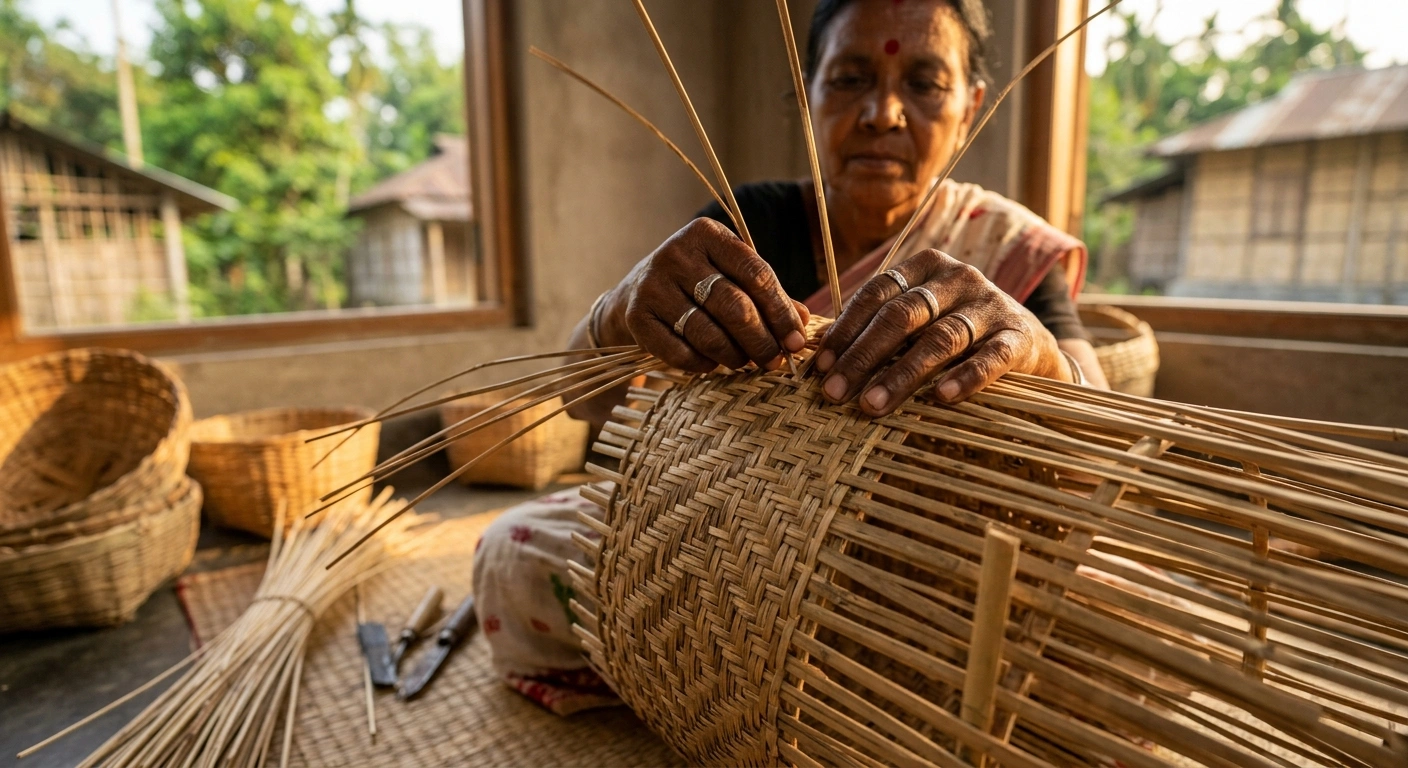
Once dried, the Kauna grass becomes flexible enough for weaving.
Artisans often spend years mastering the craft.
The weaving process includes:
The dried reeds are soaked briefly in water to restore flexibility.
Artisans visualize the shape and pattern before beginning.
Each strand is carefully interlocked by hand.
The basket gradually takes form through precise tension and alignment.
Loose ends are trimmed and reinforced.
Depending on size and complexity, a single basket may take several hours or even days to complete.
No two pieces are ever exactly alike.
That uniqueness is the hallmark of genuine craftsmanship.
Why Kauna Baskets Are Eco-Friendly
Modern consumers increasingly seek products that align with sustainable values.
Kauna baskets are naturally eco-friendly because they are:
Kauna regrows naturally every season.
Unlike plastic storage products, Kauna returns safely to nature.
Production requires minimal machinery and energy.
Traditional weaving uses entirely natural materials.
Purchases directly benefit artisan families.
Every basket represents a conscious alternative to mass-produced plastic products.
From Rural Assam to Global Homes
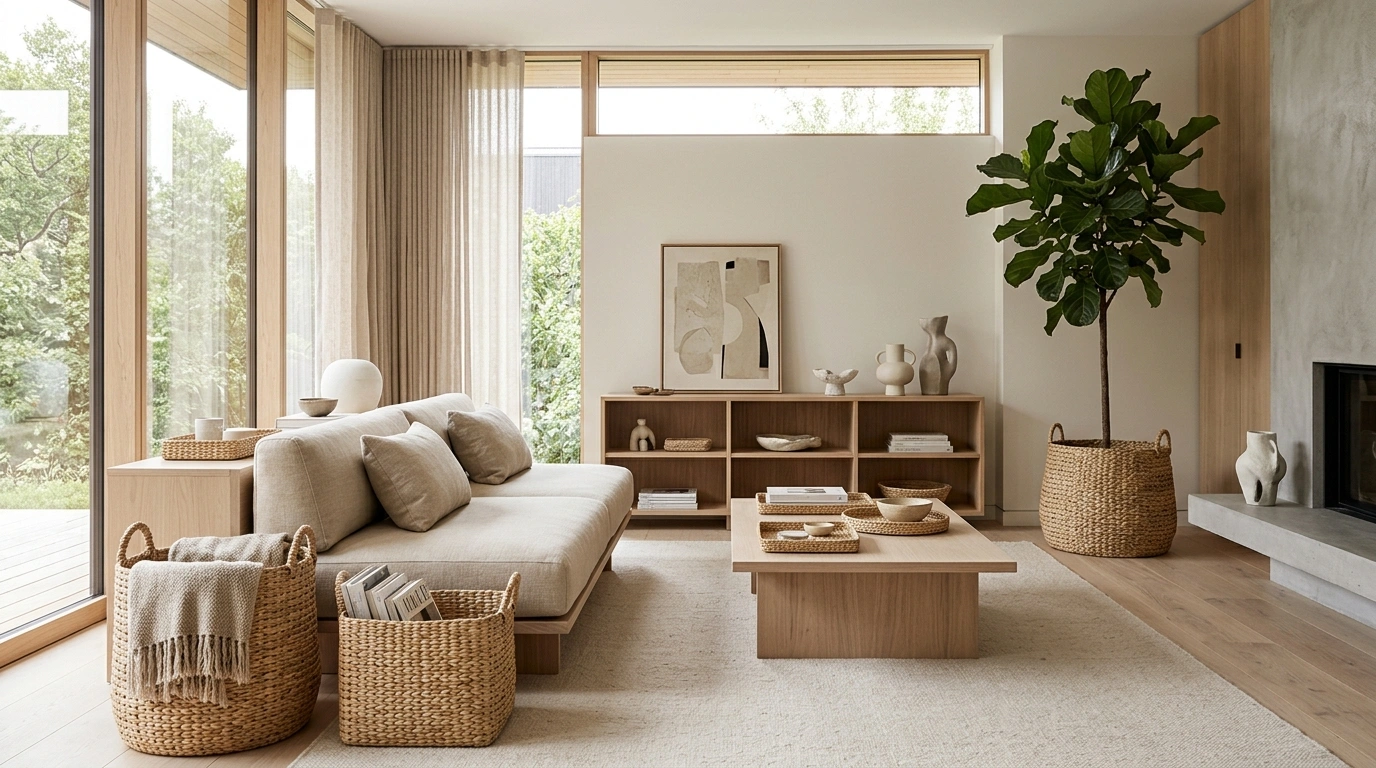
Today, Kauna products are appreciated far beyond Assam.
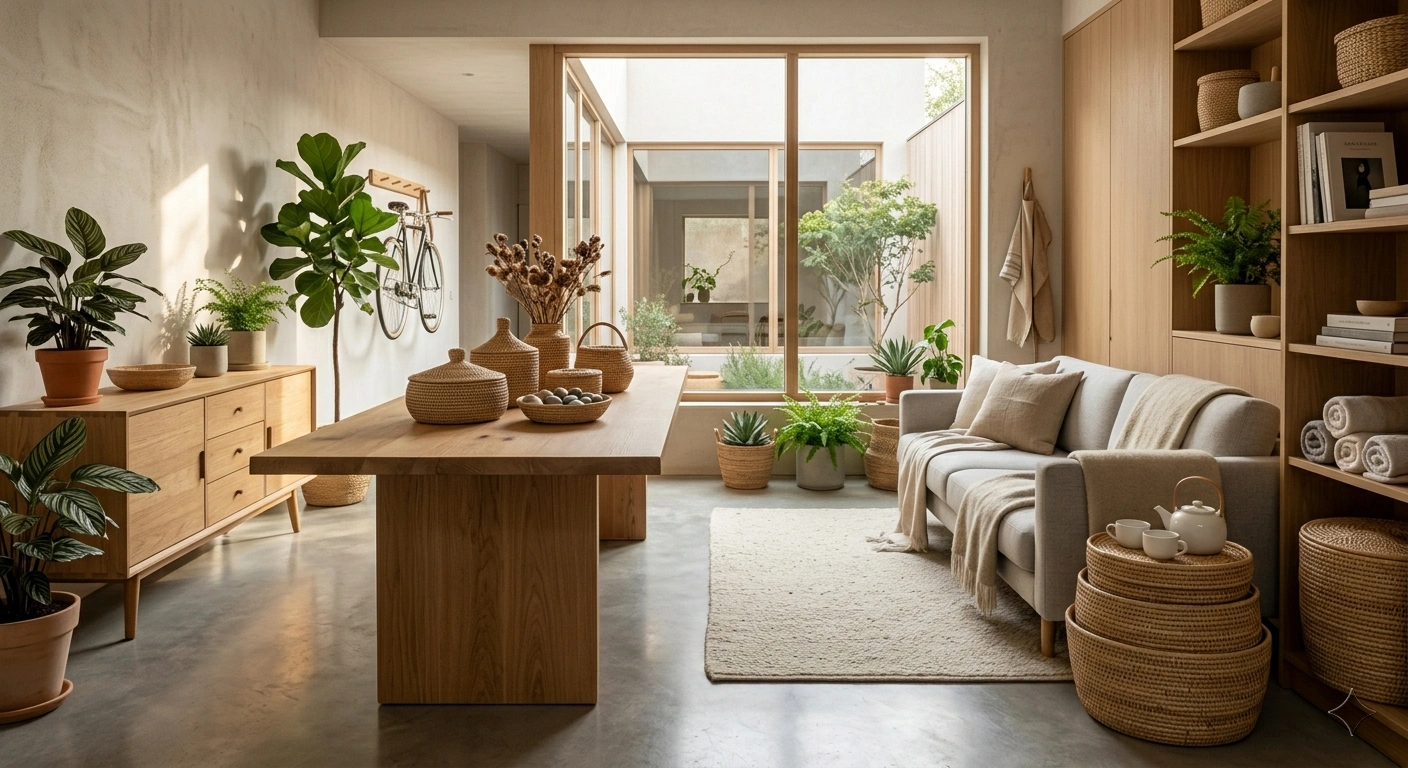
Interior designers and conscious consumers use them as:
Stylish alternatives to plastic containers.
Adding natural warmth to modern interiors.
Perfect for eco-conscious gifting.
Used in luxury resorts and eco-retreats.
Their natural texture complements minimalist design trends.
The appeal is universal.
A basket woven in a small Assamese village can find its place in a contemporary apartment in Mumbai, London, Singapore, or New York.
The Human Story Behind Every Basket
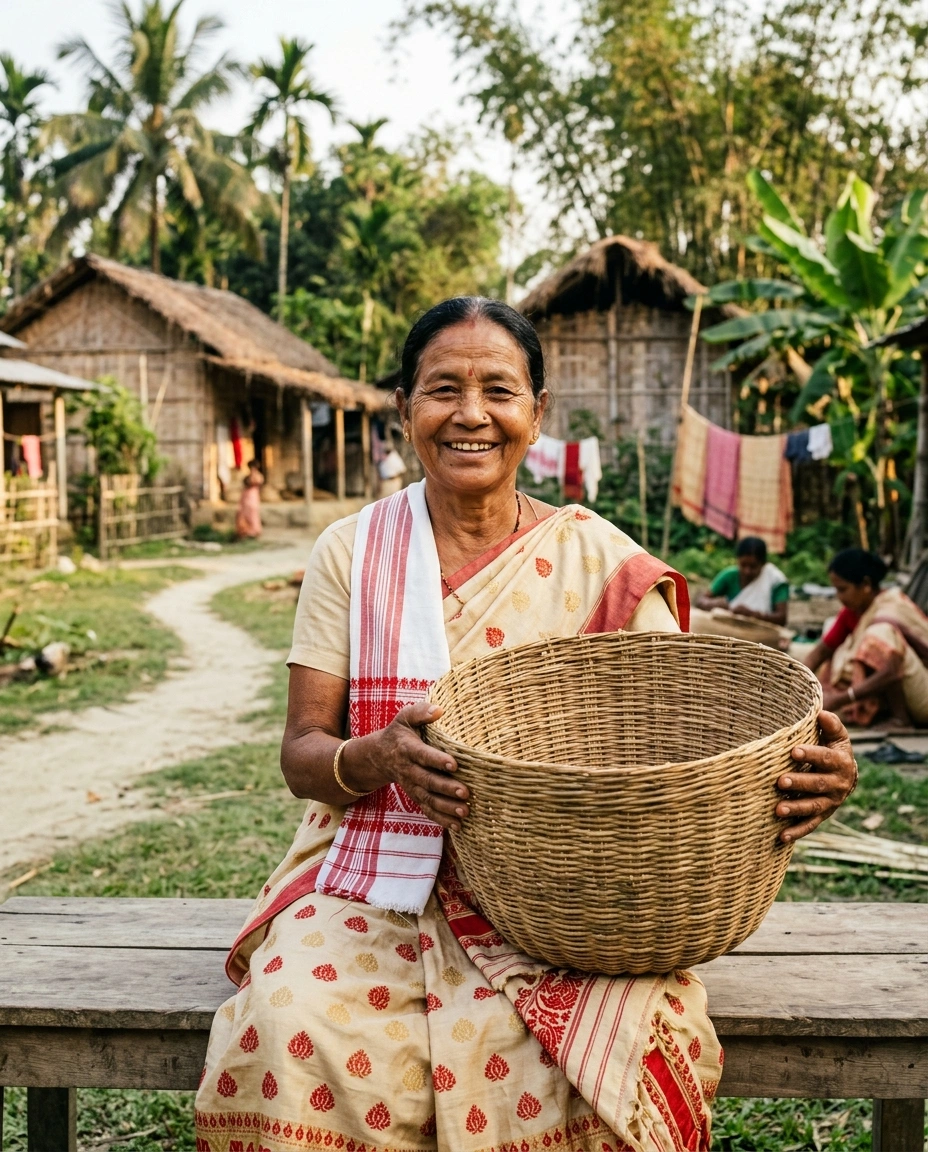
When you purchase a handmade Kauna basket, you are not simply buying a product.
You are supporting:
Every weave carries the fingerprint of an artisan.
Every basket tells a story.
People buy:
A commitment to environmentally responsible living.
A connection to something meaningful and authentic.
The preservation of skills passed through generations.
No factory can replicate handmade character.
Products that create positive social impact.
That is the true value of a Kauna basket.
From the wetlands of Assam to beautifully designed homes around the world, the journey of a Kauna basket is a testament to craftsmanship, sustainability, and cultural heritage.
At UNEKALAA, we believe every handmade creation deserves to be celebrated—not merely as a product, but as a story woven by skilled hands and rooted in tradition.
The next time you see a Kauna basket, look beyond its shape.
See the wetlands.
See the artisan.
See the journey.

0 items
0 items
0 items

2 items
1 items

2 items

0 items

0 items

1 items


Comments